

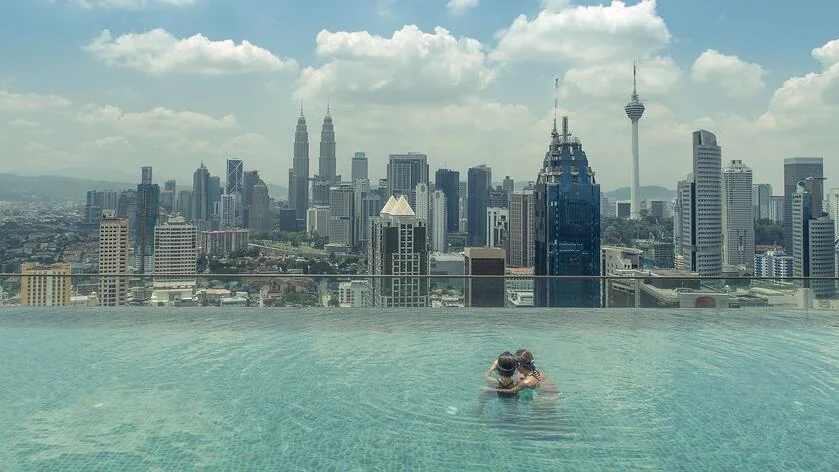
The word is in: rooftop pools are making a splash! But pools aren’t the only water-based example of rooftop amenities. Landscape architecture has experienced major innovative advances in the last few years, and in the context of this post, these innovations allow us to take water to the roof in a much cost-effective and maintenance-friendly way.
It is well known to architects and developers that -in residential and some mixed-use commercial buildings- water-based amenities can yield high return on investments and “make a property hot”.
We have covered many different examples of rooftop amenities throughout this blog series, and now we are going to talk about the most underestimated element you can place on your roof: water.
If you haven’t already been following this series from the start… then follow these shortcuts to other amenity examples:
FOLLOW THE SHORTCUTS:
Part 1: Standard Features
Part 2: Living & Sharing
Part 3: Sports & Health
Part 4: Water-based
Part 5: Rooftop Gardens
Part 6: Recreational
Part 7: Luxury & Leased
Part 8: Exotic & Pet
WATER-BASED FEATURES: EXAMPLES OF ROOFTOP AMENITIES
The Rooftop Pool: Upfront investment and long term return on investment. A building with a rooftop pool has an added value that makes the property more attractive. This results in full tenancy occupation, higher rent value, and a higher valuation of the building.
The cost of investment is significant for most developers, but the returns are well worth it. This is something you want to include in your initial designs as for adding pool to your rooftop after construction is more complicated and expensive. There are structural considerations to mitigate water drainage and design consideration to reduce maintenance cost that are much easier to apply throughout initial construction.
We suggest that architects and developers looking to maximize yields on their residential towers consider this option. An amenity validation study to uncover the potential returns, market alignment and investment cost is a good idea, for it will allow you to make an informed decision on a long-term commitment.
Hot tubs: With or without the pool, this is a classy add-on that uplifts any rooftop amenity and, in most cases, are used more frequently than pools. Custom outdoor hot tubs can also power up your amenity throughout the winter, doubling up on the value it brings to your renters.
Many of the structural considerations that apply to incorporating a pool to your rooftop also apply to incorporating a hot tub, but the cost is significantly lower. That being said, if you are making the structural investment to prepare your roof to support this water amenity, you are better off incorporating both. A factor here could be space.
Splash Pads: A paradise for family-oriented residential towers. If you are building a lot of 2-bedroom and 3-bedroom units, your target demographics are probably families. If this is the case, a sunny rooftop with a splash pad is a golden nugget for your building.
This represents a much lower investment than a rooftop pool. However, your roof will require a sophisticated drainage and irrigation system. A good idea can be to pair the splash-pad feature with other features that can share the drainage and irrigation system, like rooftop gardens, fountains and ponds.
Sculptural Fountains & Ponds: The perfect complement for walkways, Japanese gardens, and common gathering areas. In a residential scenario, your rooftop may comprise features that require sophisticated drainage and irrigation systems (gardens, planters, grass areas, splash-pads). In this case, adding a fountain or a pond makes a lot of sense. In commercial use, it is common for rooftops to have big open areas. Most of these will have sophisticated irrigation and drainage meant for planters and grass areas; adding a fountain or pond to improve the aesthetics of your open space could make a lot of sense.