

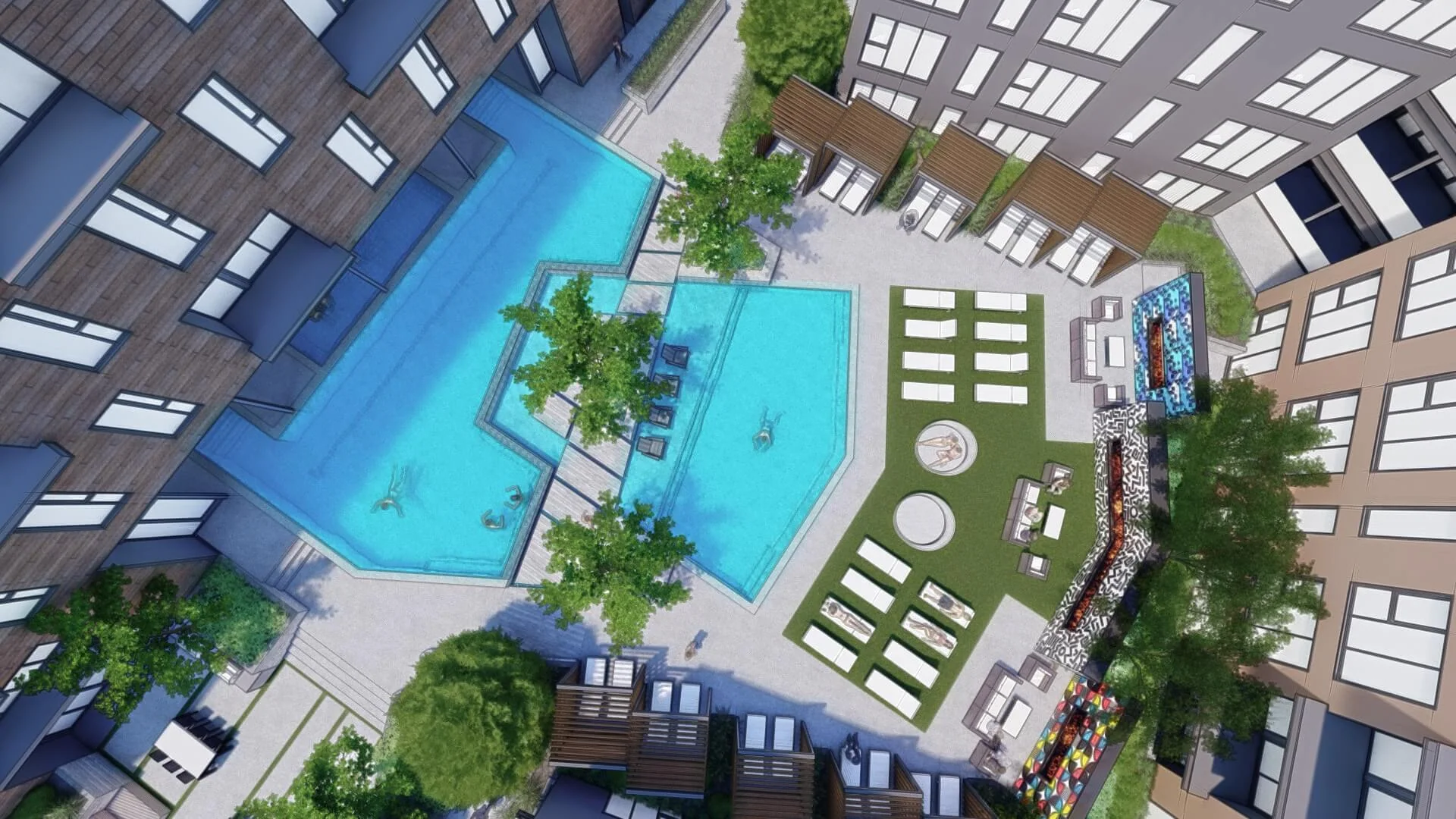
Rooftop pools have become synonymous with luxury urban apartment living. But, not all rooftop pools are created equal. All rooftop pools cost a lot to build and maintain, but not very many actually bring the results they are intended to achieve.
In fact, the failure of rooftop pools (from uselessness to leaking) has prompted many of our clients to wonder if they ought to be building rooftop pools at all. And honestly? Sometimes you shouldn’t. Offering a more unique amenity instead can be a smart play for greater differentiation in the market. Further, if you lack the budget or the unit count to justify the expense, it can be wise to pursue a different approach.
But, rooftop pools are still relevant and effective. They just have to be executed right.
How to Build and Market Your Rooftop Pool the Right Way
There are a range of choices you can make to increase the longevity of a rooftop pool and its resistance to leaks. Generally speaking, the more up-front investment you are willing and able to put down, the less you’ll deal with maintenance costs and issues down the line.
On the other hand, the effectiveness of your rooftop pool in driving sales, retention and NOI is more complicated. The space has to be designed well to get a prospect’s attention, motivate a resident to spend time there, and make them fall in love with your apartment building so they never want to leave – even when they know they are paying a rent premium.
Consider these 3 ways to make your next rooftop pool a sure success.
1) Take Full Advantage of the Rooftop Context
If you’re building in a competitive market you want your rooftop pool to stand out from the rest. One way to do that is to lean into the fact that it’s on the rooftop. But still, a standard pool deck on top of your building isn’t going to impress anyone anymore.
Even the poolside amenities and features that were once considered standouts have become commonplace and expected. Here are just a few design features you simply must include:
Unobstructed Views
First off, glass railing is a necessity. It allows for unobstructed views of the surrounding landscape or city skyline. You need a seamless visual connection between the pool and its surrounding context in order to make your users feel more immersed in the space.
Ample Greenery
The biggest drawback between a rooftop pool and one at-grade is typically the lack of trees and shrubs. But this isn’t just about aesthetics. Plants cool the air surrounding the pool and create a relaxing setting. Studies have shown that merely viewing nature and greenery lowers stress and improves well-being. Use native or climate adapted plants for their resilience in harsh rooftop environments and their connection to the surrounding contextual landscape.
Natural Materials
Similarly, you should use natural materials such as stone, wood, or tiles that tie in to the surrounding environment. When you use more grounded materials you create a rooftop that doesn’t feel like it’s on a roof. It makes the views even more inspiring because of the juxtaposition between a fully developed space and views that are usually only seen from bland, textureless rooftops.
2) Enhance the User Experience with Unique Rooftop Pool Features
Since it’s no longer enough to have a standard rectangular pool on a rooftop, you should explore the range of unique features and offerings you can implement to enhance the user experience. Here are some of the most distinctive features you could include:
Infinity Edge Pool
An infinity edge pool creates an illusion of water extending infinitely into the horizon, typically by having one or more edges that blend seamlessly with the surrounding scenery.
Acrylic Pool
An acrylic pool incorporates transparent or partially transparent sections in the pool, allowing users to see through to the view beyond. This feature provides a unique perspective, especially when the pool is situated on a high-rise building.
Underwater Music and Lighting
Underwater music can enhance the ambiance and create a relaxing or energizing atmosphere. Additionally, underwater lighting effects can add a vibrant and mesmerizing element to the pool experience, particularly at night.
Swim-Up Bar
A swim-up bar is a popular feature because users can swim or float up to a dedicated bar area within the pool and enjoy their favorite drinks without having to leave the water. It offers convenience and a fun social experience.
Waterfalls and Water Features
Incorporating waterfalls, cascades, or other unique water features into the pool design can create a visually appealing and tranquil environment. The sound of flowing water and the aesthetic beauty of these features add a touch of serenity to your rooftop pool experience.
As you blend your rooftop pool with the surrounding context and consider the program elements planned in the areas surrounding the pool deck, even more opportunities for unique features will become apparent.
For example, at Post House we designed a stepover walkthrough bisecting the two main water bodies of a one-of-a-kind indoor/outdoor pool. Then, we added a steel art tree to the center which doubles as a focal point and shade structure. Without the pathway and infinity edge we may not have considered adding the steel tree. But the space would be so much less inspiring if it was just a large continuous body of water. And the unique experience of walking through the pool wouldn’t exist.
3) Don’t Market Your Pool as a “Resort-Style” Amenity – Meet the Standards of an Actual Resort
The term “resort-style” has become a popular buzzword in the real estate industry, particularly when promoting high-end or luxury apartment complexes. While the term initially conveyed the idea of offering luxurious and extravagant amenities comparable to those found in high-end resorts, its overuse has diluted its meaning and impact.
Many multifamily apartment communities now market themselves as “resort-style” without truly delivering on the promise. The term has been stretched to cover a wide range of amenities and features that may not necessarily meet the standards one would expect from an actual resort. Its overuse and lack of specificity in marketing amenities have diminished its impact and made it less meaningful to potential residents who are inundated with the term when looking for their next apartment.
Instead of relying on a buzzword to create excitement about your rooftop pool, you should actually make it buzzworthy. Provide exclusive cabanas where users can enjoy privacy, shade, and additional comfort including personal attendants, mini-fridges, TVs, and loungers.
Host exclusive pool parties or events on the rooftop for a dynamic and lively element to the pool experience. From themed parties to live music performances, these special events can create memorable and entertaining moments for users.
Set up poolside food service from on-site restaurants, allowing users to enjoy delicious meals or snacks without leaving the pool amenity deck. The convenience of poolside dining adds an extra layer of luxury and indulgence to the overall experience.
Just because you have a rooftop pool doesn’t make it a resort. “Resort-style” is a cliche that residents don’t even hear any more. In other words: Show don’t tell. When your rooftop pool actually delivers what users expect from an actual resort, it will do far more to sell than a one-liner on your website about your “resort-style” rooftop pool.
Make Your Pool More than a Pool
With your rooftop amenities, you obviously don’t want to just check boxes. But, that doesn’t mean you shouldn’t have the expected amenities, like a rooftop pool. Just make sure you do the things that make it fresh and unique.
Create experiences that aren’t just hanging out at the run-of-the-mill pool, but something unique. Somewhere for your resident to create distinct memories because there’s no place like it. It’s more branded, it’s more experiential. Make your residents think, “Wow, I want to live here!” versus, “Yep. It’s a pool.”